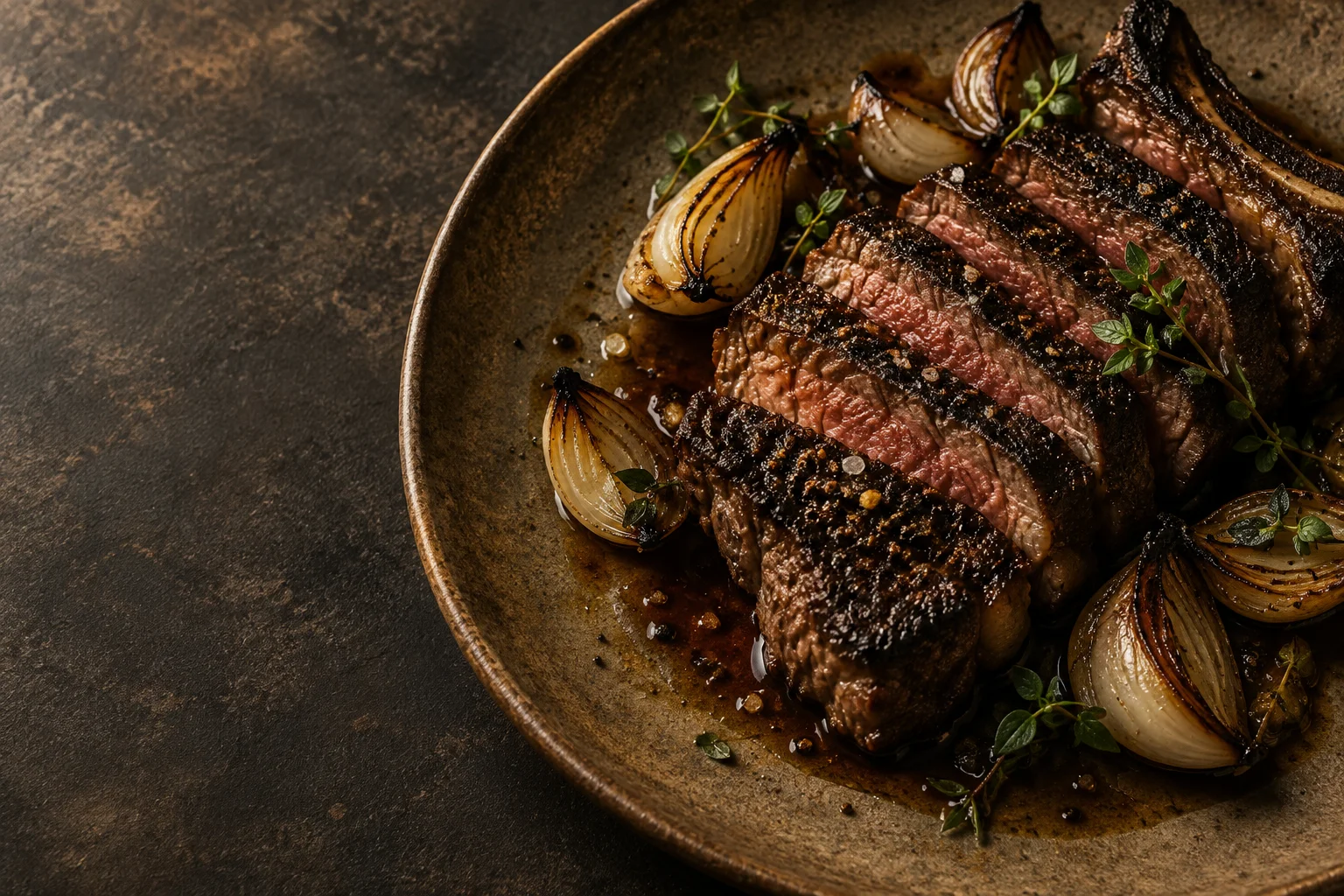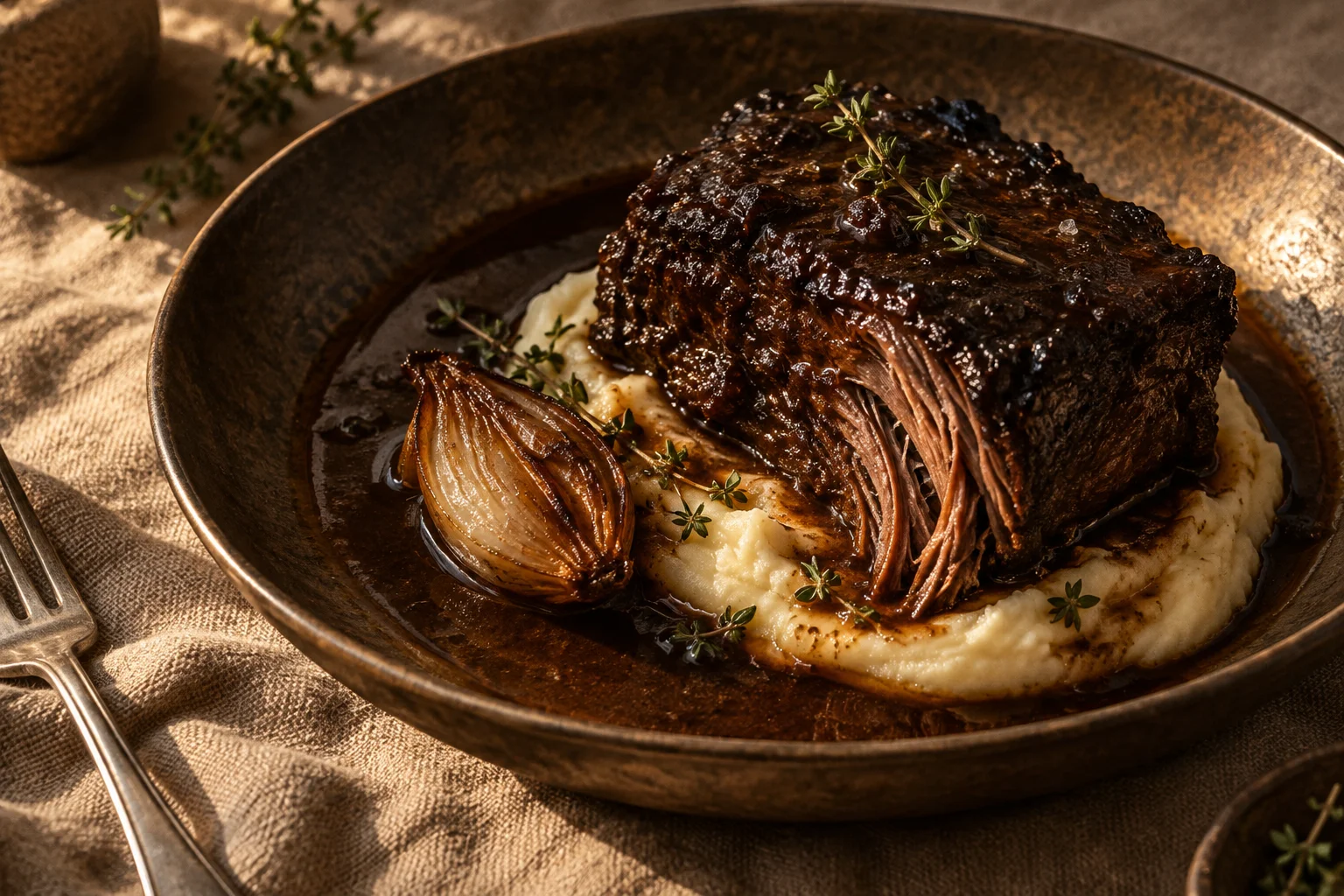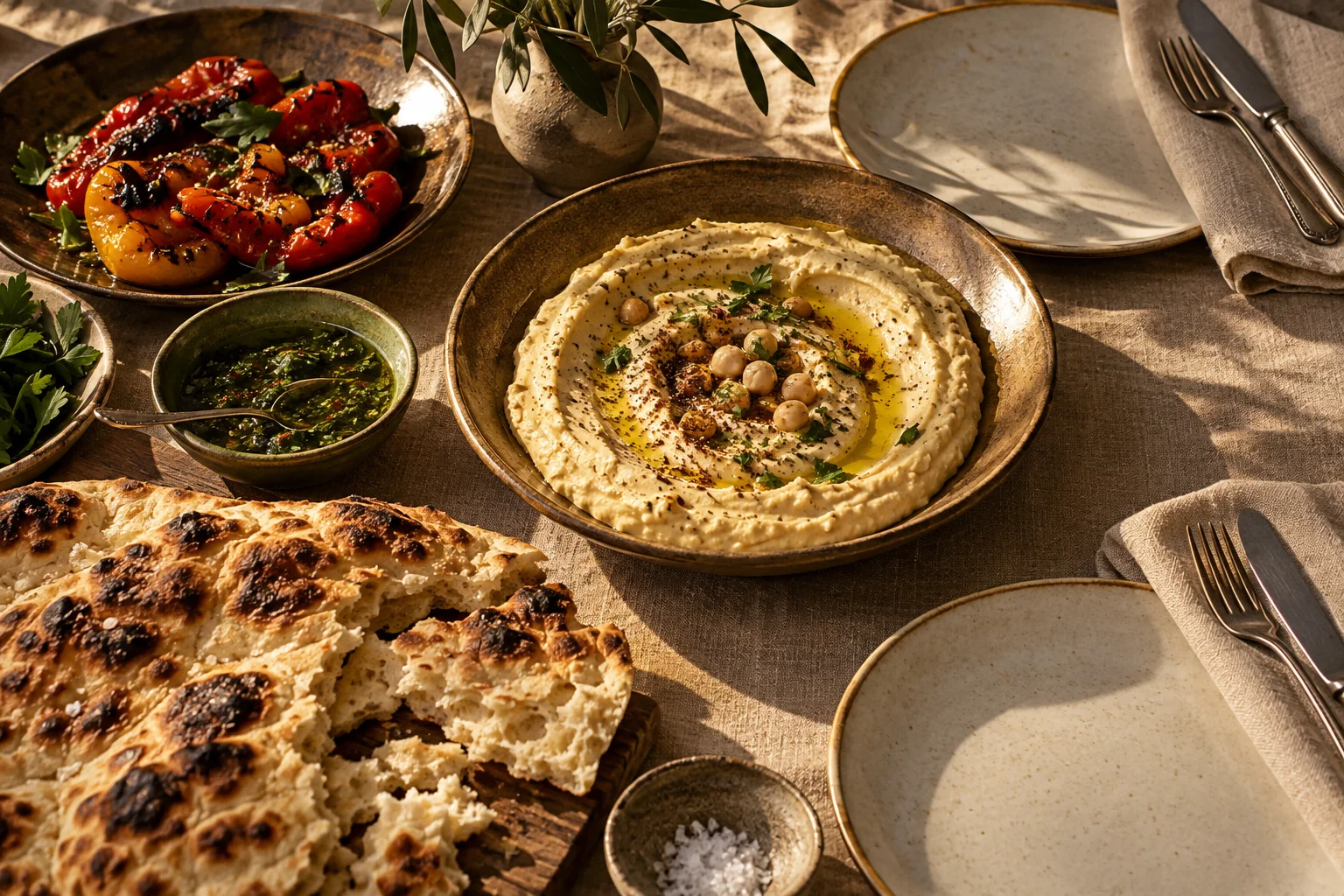

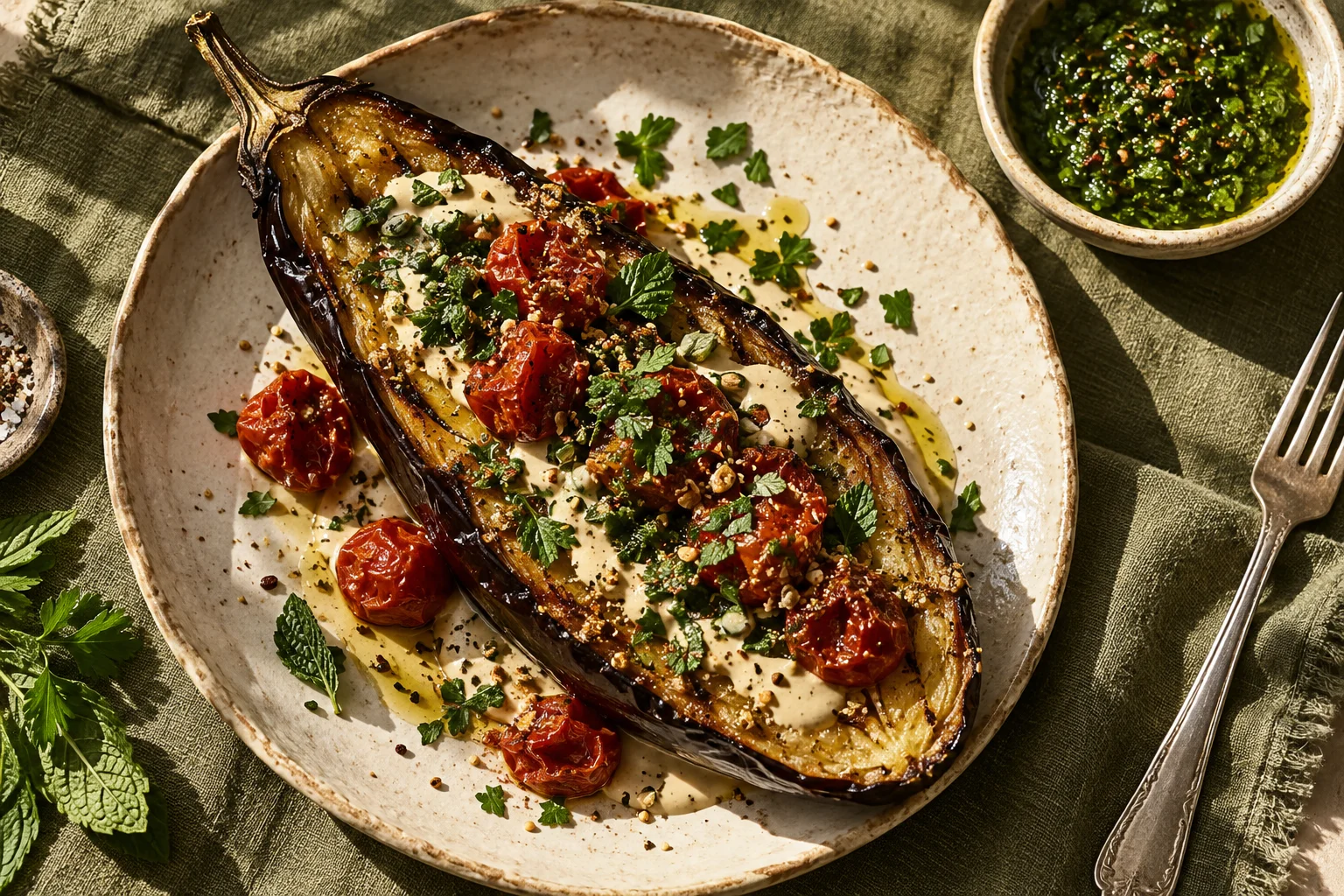
Start with a small spoonful
There is always time to add a generous helping of sauce. First taste the main ingredient on its own, then add a little sauce to one piece. It is easier to notice exactly what changed: aroma, richness, heat or aftertaste.
Think of sauce as a seasoning whose quantity you control. If it comes separately, start at the edge of your plate. Leave part of the dish plain so you have something to compare it with.
Herbs and acidity
Chimichurri is a good example of this combination. Chef Brian Patterson’s recipe from L’Academie de Cuisine brings together herbs, garlic, oil and red wine vinegar. The result is an expressive mixture with a herbal aroma and a tangy accent.
For an experiment at home, borrow the pairing idea: a browned ingredient and a fresh herb sauce. Compare a piece of roasted vegetable with and without a drop of sauce. The difference will be most noticeable in the aroma and aftertaste.
Something smooth with something crisp
A creamy sauce is interesting with an ingredient that has a firm edge or crust. The contrast is apparent in the first bite. Roasted vegetables make it particularly clear: a soft centre, browned surface and smooth sauce offer several textures at once.
If the flavour feels too uniform, try adding fresh herbs or a crisp side. If the sauce completely overwhelms the dish, use less. The guide is simple: you should want the next bite in that same proportion.
Add sauce gradually. A small spoonful helps you notice the pairing while keeping the flavour you chose the dish for in the foreground.
Try it at METIS
Chimichurri ↗Sea bass with two sauces ↗An article about food. The ingredients and pairings mentioned are examples. Find the current METIS dishes in the restaurant menu.