
Aroma comes first
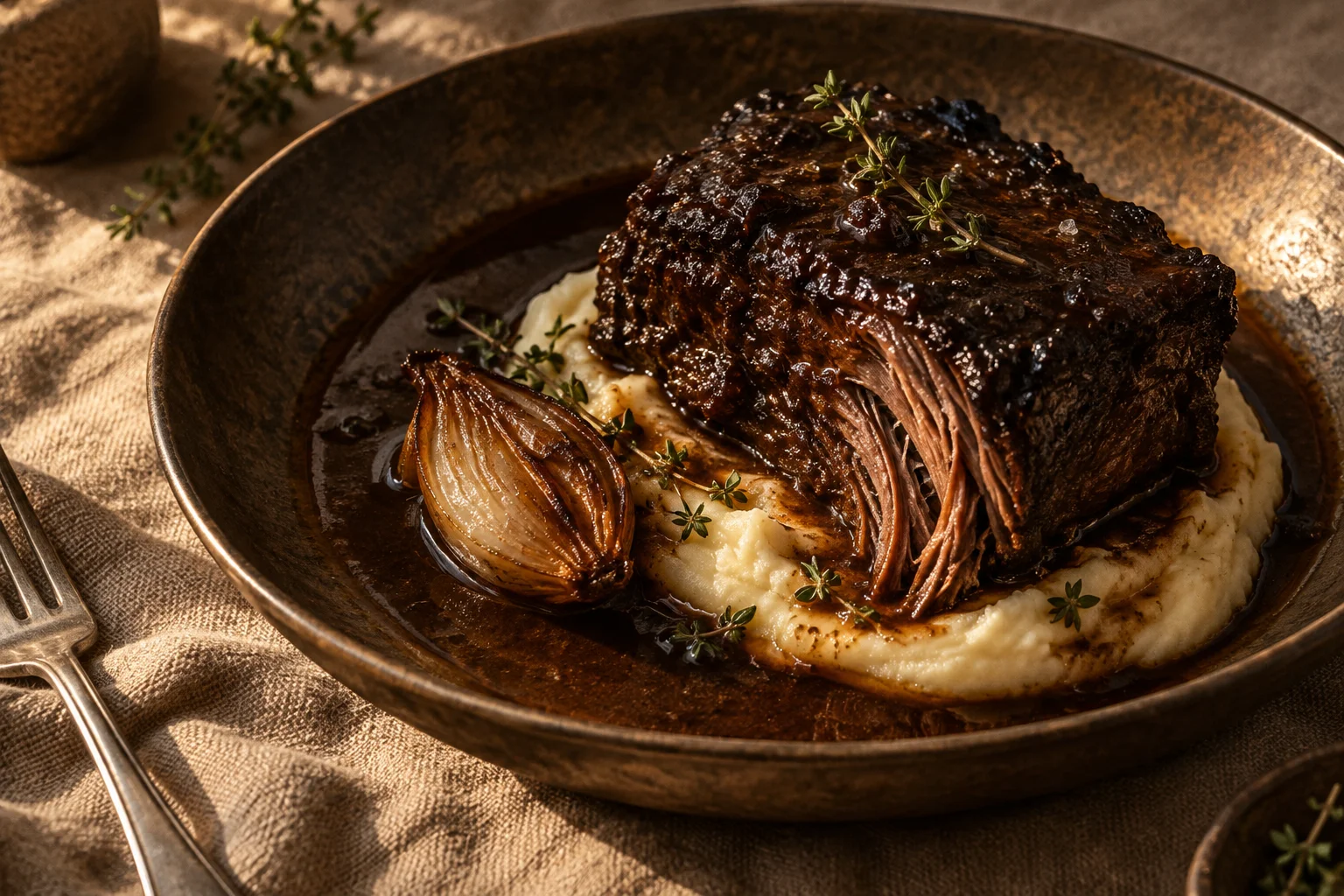
Bring a piece of toast to your nose. Its smell is noticeably different from that of fresh bread. A similar transformation takes place on the surface of meat: when heated, sugars react with amino acids. Named after Louis Camille Maillard, this group of reactions produces many new aromatic compounds.
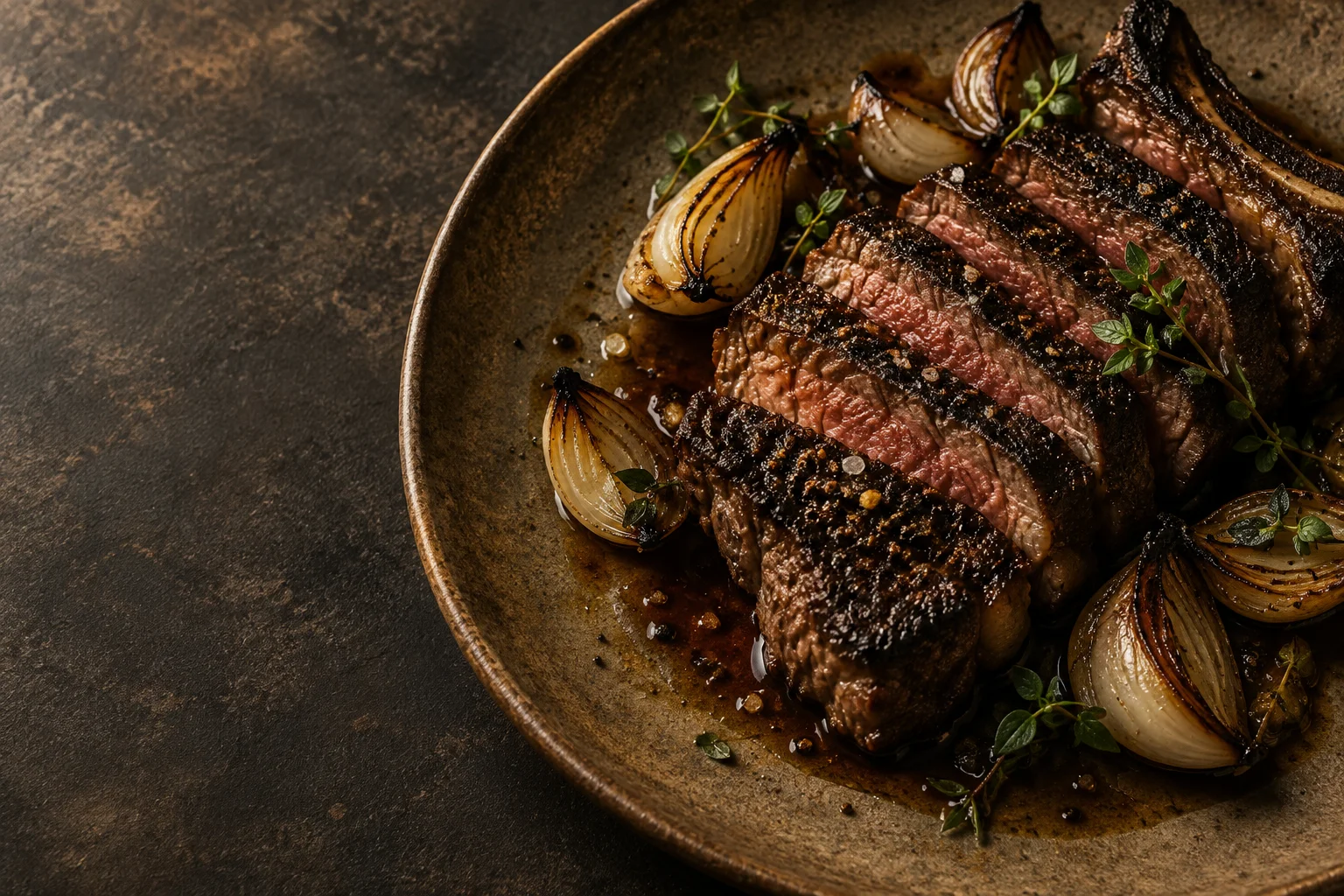
That is why a crust changes our impression of a dish so much. It develops roasted, nutty and bready notes. An open flame is not essential for the Maillard reaction: a well-heated frying pan can produce these flavours too.
Crust and smoke are different experiences
In conversation, we often group everything under “grilled”. But try noticing the aroma of smoke and the taste of a browned surface separately. A dish can have a pronounced crust with barely any smoky note. A smoked ingredient can smell of smoke while its surface remains soft.
Next time, start with a small piece without sauce. Notice its smell, then the firmness of the crust, and finally the flavour of the meat itself. This makes it easier to understand which part of the dish you enjoy most.
Why add onions and vegetables?
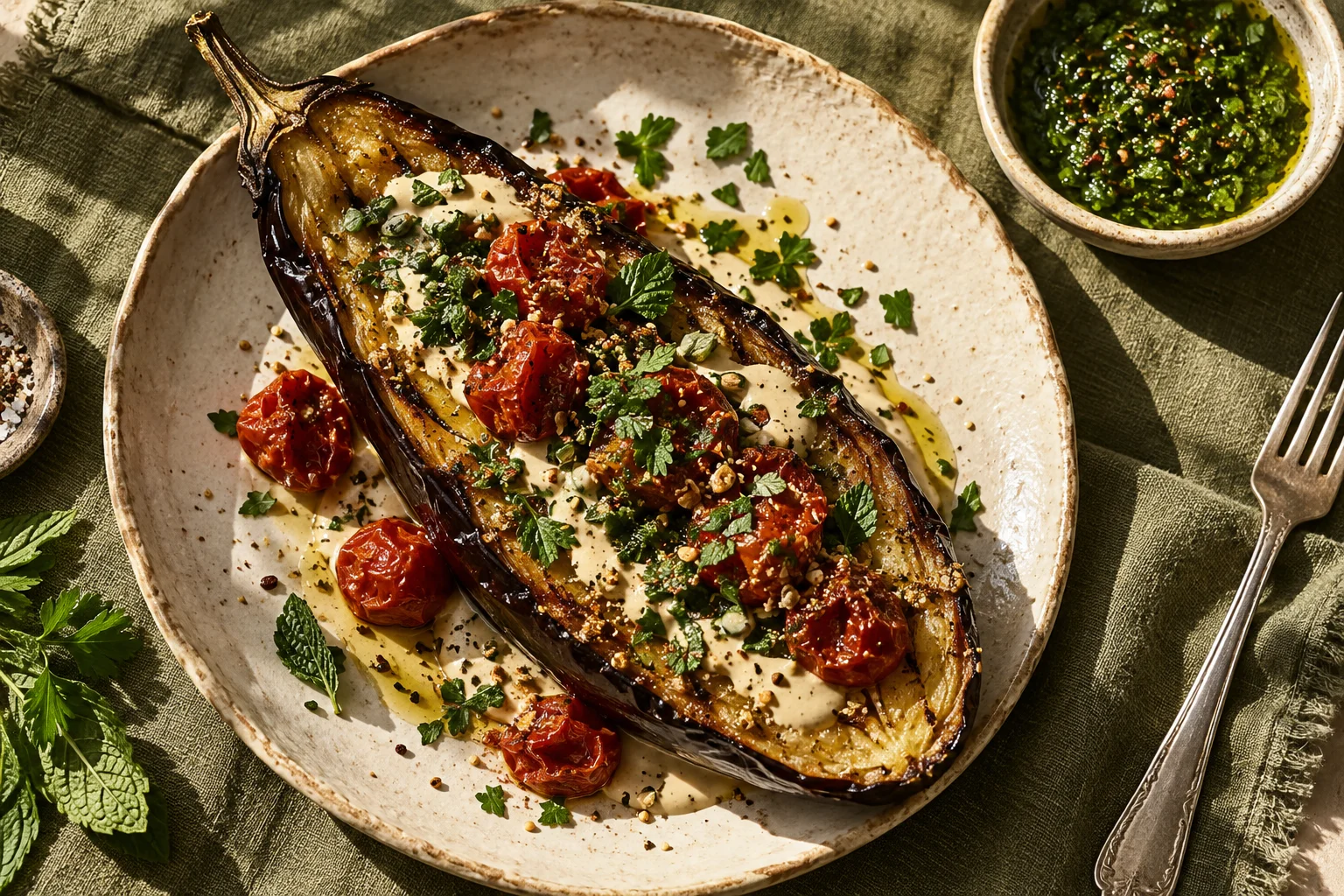
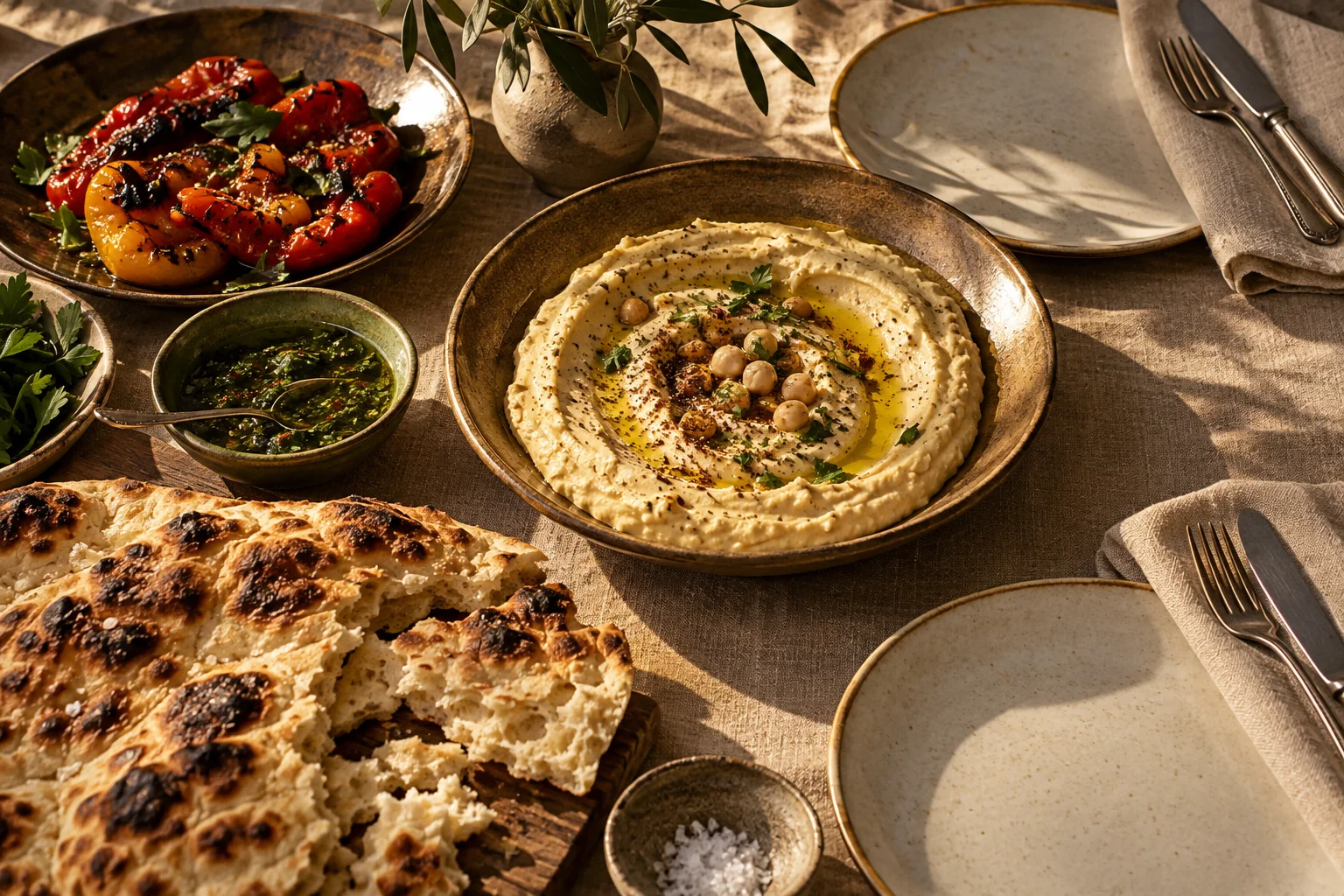
Roasted onion brings gentle sweetness, herbs freshen the aroma, and vegetables offer a pause between rich mouthfuls. A good side changes the rhythm of a meal. The next piece of meat tastes different after it.
Try three combinations: meat on its own, meat with a roasted vegetable, and meat with a drop of tangy sauce. It is a simple way to find your own balance on one plate. Start with a small amount of sauce and adjust the proportion gradually.
Try the first piece on its own, the second with a side, and the third with sauce. One dish can reveal itself in three different ways.
Try it at METIS
Charcoal-grilled lamb loin ↗Charcoal-grilled vegetable selection ↗An article about food. The ingredients and pairings mentioned are examples. Find the current METIS dishes in the restaurant menu.