
It starts with the cut
Different cuts contain different amounts of connective tissue. Cuts rich in collagen suit long cooking with moisture. In those conditions, collagen gradually turns into gelatin and the texture of the meat changes.
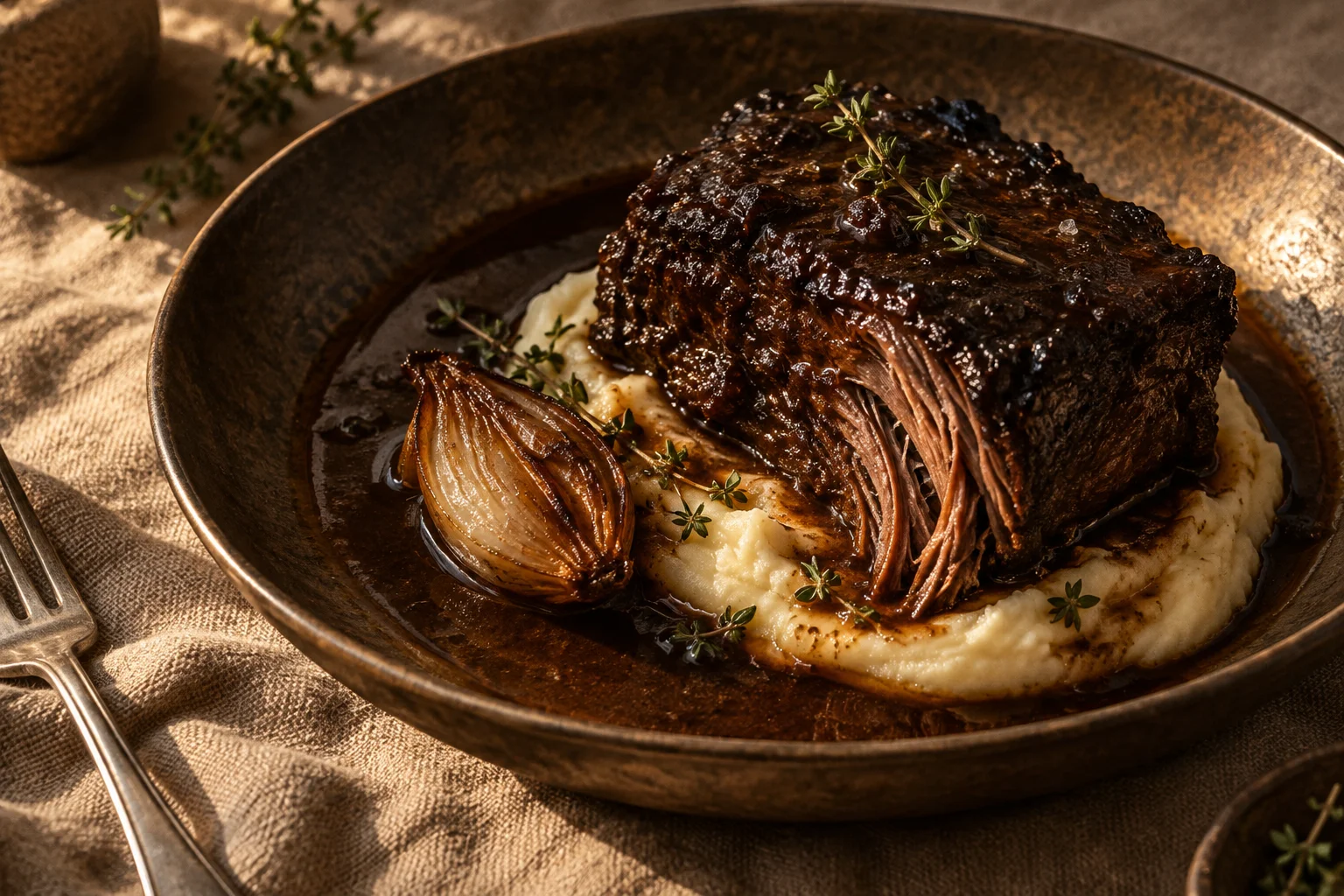
That gives slow cooking its own character. The process of becoming tender matters, while the sauce becomes part of the dish during cooking. To understand what to expect from an order, asking about the cooking method and texture is more useful than relying on the name of the meat alone.
How to read a dish description
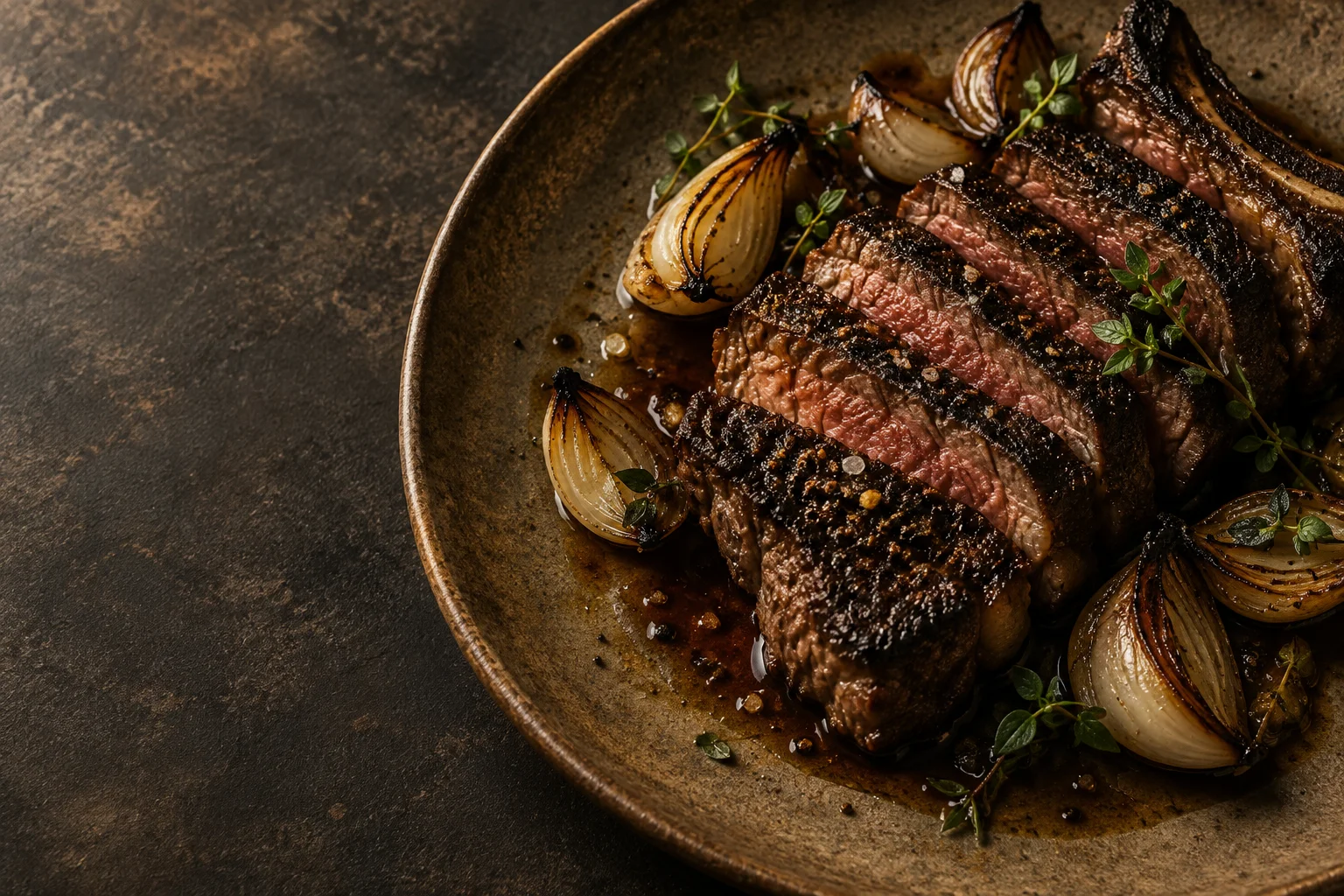
“Slow-cooked”, “stewed” and “grilled” suggest different experiences. With slow-cooked meat, you usually expect tenderness and a rich sauce. With grilled food, you may want to notice the browned surface and the character of the ingredient itself. These are useful starting points for a conversation with your server.
Ask a specific question: does the meat fall apart into strands or keep a firm bite? Is the sauce thick or light? Is it served separately or already combined with the dish? The answers can help you choose what you feel like eating today.
Finding a partner for rich flavour
Tender meat is interesting with a contrasting texture, such as a crisp vegetable or a piece of crusty bread. If the plate holds plenty of thick sauce, a mild side lets you taste it more closely.
Start with a little of the side alongside the meat. Then add something fresh or tangy and compare the sensation. There is no single correct combination: some people enjoy gathering everything into one mouthful, while others alternate flavours.
Choose meat by the texture you want: firm and browned, or tender with a rich sauce.
Try it at METIS
Slow-cooked beef with cauliflower purée ↗Paccheri with slow-cooked beef ↗An article about food. The ingredients and pairings mentioned are examples. Find the current METIS dishes in the restaurant menu.